Monday, 16 March 2020


Iceland best country for women
For the 11th year in a row, Iceland has been declared at the best country for women. No surprise then a woman, Katrin Jacobsdottir, is Prime Minister. Looking remarkably like New Zealand PM, Jacinda Ardern, she was elected in 2017 and since re-elected. Jacobsdottir has adopted New Zealand’s `Wellbeing' budget announced in 2019.

Icelandair

Almost 40 per cent of parliamentarians in 2020 are women. In 1973 it was just three per cent.
In 2018 Iceland was the first country to pass laws requiring equal pay to close the gender gap. During my visit (in September 2018) it was explained to me the law also applies to people with disabilities and other misfortunes.
Childcare is subsidised. Men, along with women, get paid maternity leave. Almost 90 percent of Iceland women are in the workforce.
It was not always like this. Well not until women banded together to force change. Withdrawing their labour, schools closed. Businesses closed. The Alliance political party was formed. And Iceland got the best results for women. Those who turn up their noses at social democracy need to look hard at Iceland. Being fair to all people results in a happy country were people perform better than in most countries where only the richest citizens reap rewards, typically at the expense of everyone else.
 Iceland’s land area is similar to New Zealand’s North Island. Its population is less than that of Christchurch, New Zealand.  I found Icelanders courteous, competent and excellent English speakers.


Day out in Iceland

 I only wish I could make a return visit. It is on the opposite side of the world to New Zealand. When I was there the time difference was 12 hours. All purchases were made by credit card. Just as well. The cash needed to buy a pint, even during happy hour, would have been hefty on my pocket.


Good but expensive

I was attracted to Iceland owing to its remote mid-Atlantic location. I knew I would enjoy Iceland’s natural landscape features even though they are similar to home. Luckily the weather was kind enabling an enviable selection to be experienced at their best.


                                                                       Strokkur Guysir

Knowing Iceland was taking on gender equality in a big way was a bonus. 


Wednesday, 25 December 2019


Mountain Matter for young people

I am delighted to learn of something new, especially is it is about something I had never heard before. For example, earlier this year I found out that June 3 was UN International bicycle day. And a few days later, June 17, is Iceland’s National Day celebrating Iceland’s independence from Danish rule on that day in 1944.  More recently I discovered December 11 is International Mountain Day. Adventurer and author, Greg Mortenson, shared the item on Facebook. The 2019 theme was ``Mountains matter for young people.’’
                                                                  Aoraki/ Mount Cook, New Zealand

Young people are active agents of change and will become our future leaders. They are custodians of mountains and their natural resources, which are threatened by climate change. Let young generations to take the lead, so that mountains and mountain peoples become central in development agendas, consequently receiving more attention, investments and research. We need to educate children about the role that mountains play in supporting billions up and downstream – by providing freshwater, energy, food and recreation. Life for rural youth living in the mountains can be hard. Many young people leave upland rural districts in search of a supposedly better life and employment (which) leads to abandoned agriculture, land degradation and a loss of cultural values and ancient traditions.

My early memories of travel were to Arthur’s Pass, a village surrounded by mountains in New Zealand’s South Island. I was aged five and awed. Arthur’s Pass was reached following a spectacular three-hour rail journey crossing gaping river gorges and passing high country lakes lapping the base of mountains. My father took charge of these early adventures. He belonged to a mountaineering club so we all followed including our long suffering –albeit non-complaining, mother forever struggling to carry the family holiday needs in improvised luggage carriers. One was a less than suitable retired hat box.


Arthur's Pass Devil's Punchbowl waterfall and rata

 Railways and mountains became my life’s big interest. I had to have mementos of my big interests – hence my life-long passion for photography. No wonder my great desire was to visit Switzerland. It was not until well into my 50s that I made it. Last year I made a fourth Swiss visit. I had become interested in mountaineering and mountain ``tramping,’’ as we call hiking in New Zealand. My acclaimed summits were not greatly spectacular but were immensely satisfying. Later, mega bicycle travel included mountain regions such as the French and Swiss Alps. I have cycle travelled through the Japanese Alps and those in Norway. Alpine regions have become magnets for my preferred travel destinations.

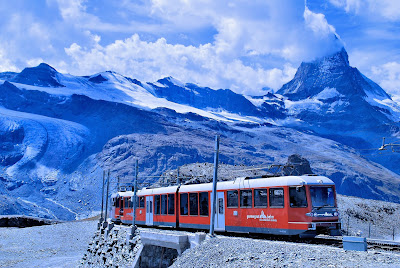
                                 Gornergrat Bahn and the Matterhorn, Switzerland

Having parents prepared to encourage an interest in mountains and the great outdoors is something I have been thankful for. I tried to interest my own children in outdoor adventures and have been delighted to be partly successful. My adult daughter has travelled to Patagonia and, in Tanzania, summited the 5875 m. Mount Kilimanjaro. No wonder I was fascinated to discover an International Mountain Day with a theme, ``mountains matter for young people.’’ Thanks to Greg Mortenson for sharing the information. I enjoyed his book, Three Cups of Tea. The web link below is worth a look.


                                   Flying high. Jungfrau backdrop, Switzerland

Top of Form
Bottom of Form


Sunday, 22 December 2019


       Daunting, beauty and tragedy on rumbling, steaming, island  

T
tRTragedy struck in New Zealand at 2.11 pm on December 9, 2019 when an offshore volcanic island, Whakaari (White Island) erupted when 47 people were visiting.  Two weeks later, the death toll was 19. Some were tourists from the cruise ship Ovation of the Seas berthed in Tauranga. The few who survived were rescued by helicopter pilots who arrived on the island soon after the eruption. They operated a tourist venture to Whakaari so knew the terrain intimately. That authorities prevented them from returning to the island will remain controversial. Also controversial is why people were able to visit a volcanic island in the first place. Uncertainty surrounds any resumption of island visits. I certainly put a hand up for resumption of tourist ventures having visited the island in February 2011. Being away from home, I missed a massive earthquake that robbed 185 lives in Christchurch on February 22. Missing an earthquake followed by standing on a live volcano may have been pushing luck too far? I had concluded a bicycle of East Cape in Whakatane. My relocated Scottish host, Hazel Agnew, was keen to visit White Island. Would I join her? I certainly would. Whakaari is a ``submarine volcano’’ having more than half its 750 m-height under the sea. It was named White Island by Lieutenant James Cook, who on October 31, 1769, spotted it nestling beneath a perpetual white cloud. He did not realise it was a volcano.  That discovery awaited the arrival of the Reverend Henry Williams in December 1826. A one-time naval officer, Williams landed on an island of sulphur. 

It It looks sufficiently desolate to be dubbed a moonscape. But this ``moonscape’’ punches jets of steam into an indigo sky. Rocks are stained yellowish-green. Grey mud bubbles. The ground rumbles.


 Whakaari is 16 km long and 8 km wide, but the visible landscape is a mere 2.4 km long by 2 km in breath.

 I I felt a rising anticipation as the island loomed larger during the 49 km launch trip from Whakatane. With a slender thread of white steam rising from its highest point, Whakaari was certainly enticing. We had been thoroughly briefed on the risk of landing. As with an earthquake, no-one can be sure of an impending volcanic eruption.


Heading to Whakaari

 Whakaari is a scenic reserve in private ownership. A variety of owners over the years have been involved in mining sulphur for fertiliser. In 1997 the ownership was vested in the Gwen Buckland Buttle No. 2 Trust. In the same year Peter and Jenny Tait became official guardians.

A A few years previously the couple had given up farming to develop Pee Jay Tours operating from Whakatane. On the day of my White Island visit, Peter Tait was skipper of PeeJay V, a modern 23-metre vessel built in New Zealand. Peter’s son, Isaac, was one of our guides. The voyage lasted more than an hour.

OOnly two small bays permit landing on the island and they are both exposed to a swell. Bouncing inflatable dinghies ferried us to an old concrete jetty. It’s a matter of grasping the handhold rail on a rising swell before the dinghy slumps into the next trough. Our guides shouted, ``Go, go, go.’’


On shore, standing on an active volcano, Isaac conducted further briefing. We must keep together to avoid the risk of literally stepping into hot water, or worse. We had to wear hard hats, and carry gas masks to use if the sulphur became overpowering.


Amazing rumbling environment


OOur surrounds were both spectacular and threatening. I was delighted we could get within an arm’s length of hot steaming vents such as Donald Duck Crater and Peelay Crater. (Craters have names for scientific identification)

EWe walked through the base of a former crater to a high point on the rim and peer into the steaming cauldron of Main Crater.

SSulphur mining on White Island started in 1885. Disasters temporarily closed operations. Soon after re-opening in 1914 12 lives were lost when part of the main crater rim collapsed sending a lahar to demolish the mining facilities.

reRescuers digging through steaming debris found no trace of men or buildings. Some wreckage was later washed up at Tauranga.  

As a workplace, White Island had a deservedly tarnished reputation.  For all that there was no shortage of applicants during the 1930s depression. Many sighting the steaming, desolate, landscape remained on the ssship.


Hazel Agnew

Whakaari is the northernmost volcano in Taupo Volcanic Zone, sitting on the line where the Pacific Plate and Indian-Australian Plate meet.   These days the island is of particular interest to those working for the Institute of Geological and Nuclear Sciences located at Wairakei. Staff visit the island every two months to record surface deformation, and their solar-powered seismograph continually measures earthquake and volcanic tremors.

DDaily guided tours also assisted in gathering valuable information. Our guide told us of the visible changes to the island after the previous big eruption in July 2000.  

``Wet ash made the surface slippery and restricted access. When it dried the surface was like deep powder snow. The main crater had been relocated into a new indent 150 metres across. Cleaning ash from gear, including the boat, was our constant chore.’’

DDespite the risks, White Island tours, offering the rare opportunity to walk on an active volcano, have been in great demand.  Prior to December 9, 2019, no-one had suffered serious injury during guided visits.

 We walked on the island for two hours, ending at the remnants of the Crater Bay sulphur factory. It exists as an involuntary laboratory to observe the corrosive ability of the island’s gases. A Fordson tractor has all but disintegrated, but its bald rubber tyres were intact. Sulphur mining ceased permanently in 1933. The resulting fertiliser was said to be ineffective anyway. It burned the soil. Throughout the stay on Whakaari I felt remarkably safe and well guided.


Steaming wonderland


Saturday, 9 November 2019


Musical talent abounds for young and old
Last Sunday afternoon I was invited to Antonio’s house for a music party. I will point out Antonio is Japanese. When he arrived in Christchurch 27 years ago he didn’t think the locals could pronounce his Japanese name, Ryozo.  ``Antonio’’ is from his interest in Spanish Flamingo dancing. He thought ``Antonio’ ‘would be a familiar moniker for a Western country.


                              Antonio playing for his 70th birthday concert

When aged 57 he decided to learn the piano.  ``It’s never too late to start something new,’’ became his catch cry. Persistence was rewarded. He preferred music that pleased. Easy of difficult was not the issue. He became an accomplished pianist finally purchasing grand piano made by Japanese piano maker, Shigeru Kawai. It replaced his previous instrument with discoloured, even missing, keys. His music interest attracted many musical friends. They were soon joining Antonio’s concerts such as one I attended for Antonio’s 70th birthday. Antonio, having previously been a chef, was the ideal host. Over time, I have got to meet Antonio’s musical friends. Last Sunday I met Fumiko Yamazaki, a professional vibraphone player. Another professional trombone player had performed with Christchurch Symphony Orchestra. 

Fumiko Yamazaki on the vibraphone


Keina, cello player 


What astounded me were the youngsters performing. Keina managed the cello. Other young musicians managed the piano, the trumpet, exceedingly well. I was awestruck by the raw talent. But it aroused a regret. I have done many things in my 76 years. One thing I never did was to learn a musical instrument. Had I have done so, what would I have arrived at for Antonio’s music party?  Maybe the bagpipes? That might have been interesting. Anyway, I have an ambition for another lifetime.


Tuesday, 22 October 2019


Art in the forest
A ditty we sang as kids went;
``If you go down to the woods today
you’re sure of a big surprise.
 If you go down to the woods today
you’d better go in disguise’’
It was, of course, The Teddy Bears’ Picnic. The lyrics were written in 1932 by songwriter, Jimmy Kennedy. The lyrics take on a new significance if one goes down to the woods in Hanmer Forest. A series of creatures and critters are found along the one-kilometre Forest Amble walk.  They are the work of Andrew Lyons of Heathcotte Valley in Christchurch. Lyons describes himself as a ``shape maker’’ rather than an artist or sculpture. His forest Images are realistic.


 They include a Labrador dog that sends real dogs into a barking frenzy, a giant falcon, tree huger extraordinary, tree-climbing possums and a fantail.


 Lyons carved his images from a giant redwood necessarily removed from the Hanmer Springs thermal pools complex. The tree was taken over by the Hanmer Heritage Forest Trust. Funding was sourced from Pub Charity and the project was supported by stakeholders, Ngai Tahu and Rayonier 
Matariki Forests.


                                                         Andrew Lyons

Lyons ably used the redwood’s natural colours and grain to enhance his creations. ``Forest Amble’’ describes the walk perfectly. It is ideal for all ages and families. The trail meanders amongst a variety of pine trees, European alder, Norway spruce, European larch (delightful in
 autumn) and macrocarpa. Much of the forest was planted during the early 1900s as experimental trials. Hanmer Heritage Forest is protected under a Crown Covenant to preserve its special character. Hanmer Heritage Forest Trust also ensures public access to the woods.   
The circular Forest Amble walk takes about 30 minutes to complete. It is likely to take longer when pausing to appreciate the work of Andrew Lyons. He has included several sculptured mushrooms that are ideal to sit upon when resting. The final sculpture is a striking fantail. Many people miss this one.


 A chorus from abundant bird life provides a pleasing accompaniment while walking or resting. Forest Amble and connecting trails are also poplar with mountain bikers. Andrew Lyons has had many jobs –from a postie to TVNZ set builder. He describes himself as ``a fiddler.’’ He needs to be creative.   When younger (he is in his late 60s) he would walk through Banks Peninsula sourcing fallen trees. Beach driftwood is also sought as raw materials. He says he would never cut down a living tree.


Tuesday, 8 October 2019


Tragedy commemorated on Oamaru plaque
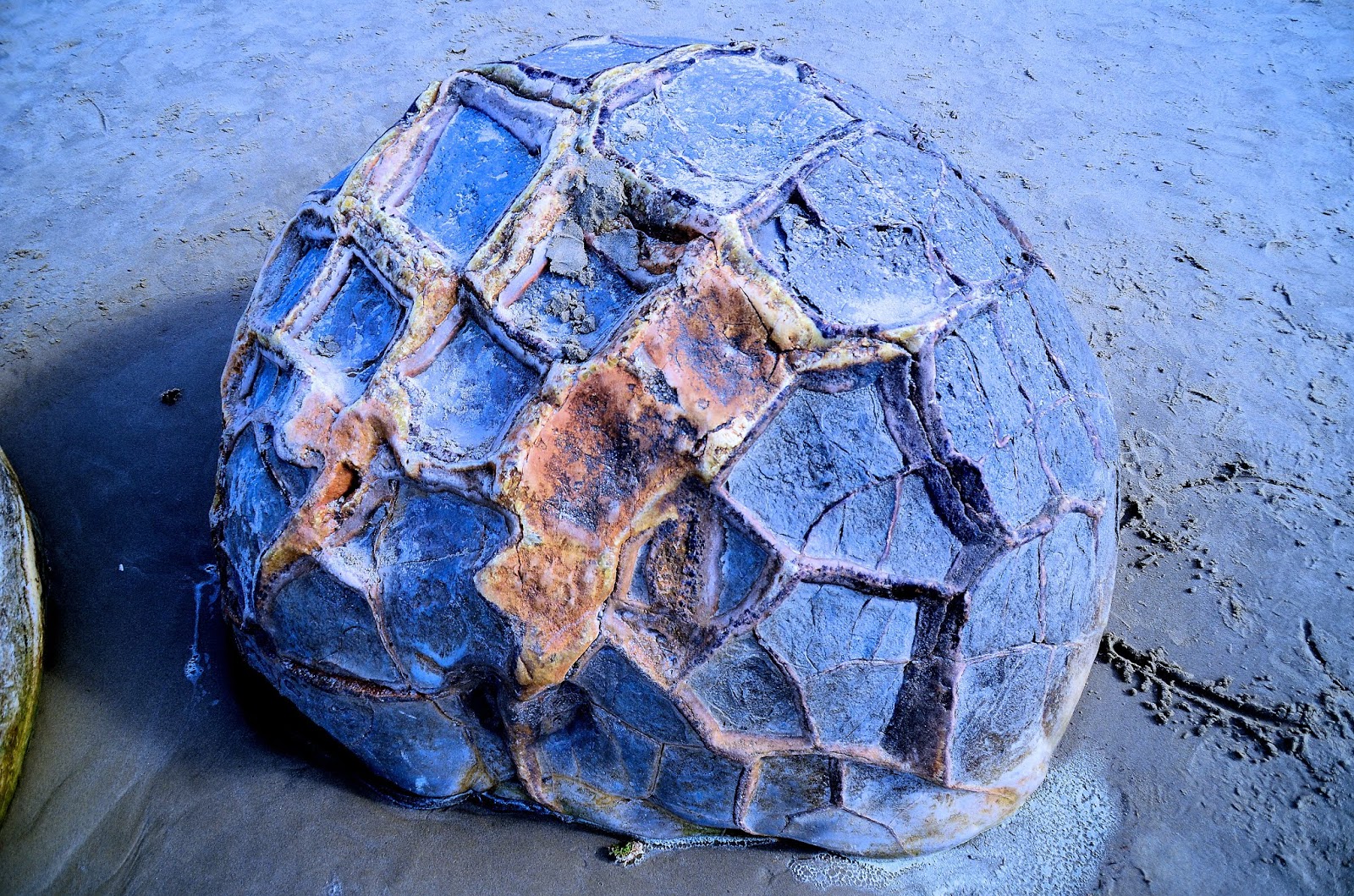
Continuing from my previous blog, Oamaru is a rewarding place to photograph. The small north Otago city is identified by neatly preserved historic buildings. It is known as ``Whitestone City’’ owing to the limestone building materials quarried in nearby hills. More recently, Oamaru has become the ``Steampunk’’ capital. And not so far away is a beach strewn with the famed Moeraki Boulders.
A plaque beside the railway near the Oamaru Botanic Gardens has frequently caught my attention. It commemorates an 11-year-old girl, Norma Anne Kearns, who was killed by a southbound express train while trying to save her dog. The tragedy happened on 22 December 1950.
The plaque was erected by the Animal Lovers and Protection Society.


In an effort to find out more, I posted a photo of the plaque on New Zealand Railway Geography Facebook page. John Clark kindly responded with a link to a story in the Oamaru Mail on 23 December. Apparently, Norma Kearns had just arrived in Oamaru from Invercargill for a holiday with a family friend, Mrs E. S. Miller of 15 Hull Street. . She was accompanied by her parents. Norma took her family’s dog for a run about 4 p.m. At the Severn Street railway crossing, the dog sat in the middle of the railway track. Unaware of the approaching train, Norma went to remove her dog from the railway line. She saved her dog but not herself. The locomotive struck Norma throwing her clear of the railway. Doctors were quickly on the scene but Norma’s injuries were fatal. She died within a few minutes. In the meantime her mother was worried when her daughter did not return for tea. It was 8.30 p.m. when a neighbour advised Mrs Kearns of the tragedy. Norma’s father identified his deceased daughter and, next morning, attended an inquest.
I have always enjoyed discovering railway details. Some, as with this plaque, can be disturbingly poignant.
                                               Moeraki Boulders south of Oamaru


                                                Oamaru, the Steampunk city

Monday, 7 October 2019


Recording a passion

This past weekend was the Christchurch Model Train show. This year, about the 30th event, I did not return home empty handed. I had bought a train set – a Marklin starter set comprising a small tank loco, two wagons, some track and remote controller.

                                         Roy' new train set
 In my youth I had been a railway modelling guru. Those days I could afford little more than a Marklin catalogue. It was great bedtime reading. I settled for a less expensive brand funded by school holiday raspberry picking. It was an eight mile bicycle ride to the Yaldhurst raspberry farm. I was keen. Those days I had a friend of the same age and same railway interest. He was Neil Andrews.


Neil Andrews shows how it is done at the Train Show

 One stage we combined our model trains in a layout in his back garden shed. It was great for a while. Then one day, the last day of the 1959 May school holidays, Neil suggested we borrow (without asking) a camera from our respective absent families. I knew where my brother kept his Agfa Clack.
We set off cycling to the Linwood locomotive depot, having first called in at the local chemist to buy a roll of film. Teenage boys typically called into the chemist to buy French Letters. Our purchases did start with ``f’’. Unknown to me, buying that first roll of 120 film was the beginning of a lifelong passion – photography. The film was subsequently returned to the chemist shop for processing.
The eight 6 x 9 cm glossy prints I collected a couple of days later weren’t art pieces by any means. But they were encouraging. I soon began to think. Well model railways were an expression for my big interest in railways. Would photography do that better?  Well, yes, I concluded. The photography fledgling interest took off at a great pace. I got a summer holiday job in a camera store. The cash earned purchased my first 35 mm camera, a Kodak Retinette. Initially the camera was taken to the railway and became necessary kit for train journeys. Other subjects interested. I enjoyed the outdoors and I could photograph my occasional girlfriend. I acquired more cameras and experimented with larger formats. I worked in photo studios and eventually started my own photography business. It was mostly weddings and portraits. Looking back, the amount of toil I did- not just the photography but also the developing and printing. I should have made lots of money. Sadly I was not a gifted business person. Later I started writing, initially as an opportunity to sell photographs for magazines and books. It snowballed until I got my first scribe’s employment –on the Christchurch Press. So that was my life for most of my life. And so enjoyable.
Recently in a moment of weakness I volunteered to join the committee of the Christchurch Big Model Railway Show. I was the only non-railway modeller involved. The great thing about it was meeting up with my friend of many years ago, Neil Andrews. While I had taken on new interests, Neil had stuck to railway modelling. We reminisced about our efforts to follow our railway interest. This mostly involved cycling throughout Canterbury province in search of railway items of interest. Much of our recall had an element of truth. Maybe there was a tad of exaggeration and a lie or three. Most impressive were Neil’s stories following his model train interest throughout America and Europe. He had, for instance, been to all the great model train exhibitions and events in Germany. Amongst it all I mentioned one year I would buy some model train stuff to once again get involved. Another prompt was been elected Patron of the Christchurch Model Railway Club. This was owing to my long time railway interest. So here I am with my first ever Marklin bits and pieces. One of the train show’s long-time trade exhibitors had been Toottoot.co.nz importers of Marklin. Where it will all go from here is anyone’s guess. For a start, the models look great gathering dust on top of the bookcase.
                                              One of Roy's successful photographs of the 1970s


                               Kids love the model train show. Many kids are in their 70s.


                                        Railway modelling at its best. Scene at Lyttelton in 1963