Monday, 20 May 2019


Measuring success via wellbeing.

The New Zealand’s 2019 budget scheduled for May 30 will be the first where well-being rather than GDP (Gross Domestic Product) will be in the front seat. New Zealand boasted of a ``rockstar’’ economy for many years with a GDP growth the envy of many countries. Yet homeless people and child poverty were rife. Well-being is a measure of satisfaction achieved by reducing the impact of social issue woes brought about by domestic violence, mental health issues and deprived children.  Minister of finance, Grant Robertson, concedes the long-used GDP measure is an arthritic dinosaur. The ``well-being’’ concept is not new according to my present reading. The Blue Zones of Happiness   by Dan Buettner. The book is series of ``lessons from the world’s happiest people.’’ Buettner is a New York Times best-selling author.


It was one-time British Prime Minister, David Cameron, who claimed it was time to admit there was more to life than money.  ``Well-being cannot be measured by money or traded in markets,’’ he said during his 2010 campaign to instigate well-being as a measure of success. Well-being is about the beauty of surroundings and culture. ``Improving our society’s sense of well-being is, I believe, the central political challenge of our times.’’ 

One cannot imagine Cameron’s tory mates agreeing but German Chancellor, Angela Merkel, came to a similar conclusion in 2013 following a two-year study of nationwide growth, prosperity and quality of life.

``We look at the stock exchange index or currencies on the news each morning and talk a lot about growth in terms of gross domestic product but we often don’t prioritise what is really most important to people,’’ said Merkel. And a former French president, Nicolas Sarkozy, said in 2009 ``there has been a troubling disconnect in recent years between what government statics are saying about the economy and what most people are feeling.’’

As was the case during New Zealand’s years of so-called ``rockstar’’ economy, French people were not feeling any better about their lives despite rising production and profits. ``The world over, citizens think we are lying to them and that the figures are wrong or being manipulated,’’ said Sarkozy. ``And they have reasons to think that.’’

GDP is the total value of goods and services produced in a nation divided by its population. When GDP is rising it suggests people are employed and spending money. But most worthy economists will admit GDP does not say anything important about society such as who is doing well in a larger sense and who isn’t. An example is that while GDP in the US increased over many years, most Americans were worse off.

Joseph Stinglitz who won the Nobel Prize in economics in 2001, said, ``the real benefits have gone to the very top. At the bottom, real wages adjusted for today are lower than they were 60 years ago. ``So this is an economic system not working for most people.’’

So while I predict many Kiwis will scoff at the concept of a well-being budget, our government has been willing to create an economic plan based on a wealth of quality international research. Our New Zealand Government has the courage to set a new tack in economic management. Let us wish them well. If successful, other countries are likely to take on well-being.   People all-over stand to benefit.


Monday, 15 April 2019


Tourism in overdrive      
A recent stopover at the Moeraki Boulders, a natural Otago feature, had me wondering. It was not my first visit but this one was different. The reason, the unexpected swarm of people. On previous visits I would certainly see others. But I could also have the beach almost to myself and immediate companions. Previous visits had us parking near the beach then walking for 10 to 15 minutes to see the amazing boulders strewn along the tide line. They looked like remnants from a game of bowels played by giants who, becoming bored, had sauntered off.


O this recent occasion, we missed the familiar car park and, instead, followed signs that landed us at a large souvenir venue with a cafĂ© and bar. To use the short track to the beach we were asked to pay $2 each. The amazing natural feature usually attracts 300,000 visitors annually. TripAdvisor reviews frequently give Moeraki Boulders minimum points. ``It is an attraction over-run with teenagers and Asians intent on taking selfies.’’   
Maori mythology tells us the boulders were baskets carrying kumara. They were aboard the sailing canoe Arai-te-uru when it was wreaked along the southern South Island coast.


The wreck would have strewn the canoe’s contents much as they appear these days. What looks like a net encasing a much-photographed boulder is multi-coloured calcite, an ingredient of the large spherical boulders.
Such curiosities of nature are found on beaches in several New Zealand locations.

 The Moeraki boulders, however, are the best known. Complementing Maori mythology is science, telling us the Moeraki Boulders are concretions created by the cementation of the Paleocene mudstone of the Moeraki Formation, from which they have been exhumed from embankments by coastal erosion. The main body of the boulders started forming in what was then marine mud, near the surface of the Paleocene sea floor. This is demonstrated by studies of their composition; specifically the magnesium and iron content, and stable isotopes of oxygen and carbon. Their spherical shape indicates that the source of calcium was mass diffusion, as opposed to fluid flow. The larger boulders, two metres in diameter, are estimated to have taken up to five million years to grow while 10 to 50 metres of marine mud accumulated on the seafloor above them. After the concretions formed, large cracks known as septaria formed in them. Brown calcite, yellow calcite, and small amounts of dolomite and quartz progressively filled these cracks when a drop in sea level allowed fresh groundwater to flow through the mudstone enclosing them.
Amazing.
I am not anti-tourism. I have worked for a vibrant tourist attractions company and have been a long-time travel writer. I also travel a lot myself. I appreciate the interchange of cultures having many beneficial add-ons. One would be enhancing world peace. Travellers of varied ethnic origins get on well together in backpackers, for example.


New Zealand attracts $39.1 billion annually from tourists. (2018 stats.) Tourists contribute $3.7 billion in GST alone. The industry employs 216,012 people. That’s eight per cent of the workforce.I toss impressive numbers through my thinking as I navigate a path through the hordes at the Moeraki Boulders. Agile younger people perform handstands on boulders or climb into them. One Chinese lass appealingly sits cross-legged on a boulder making me wonder if she is a new twist on Napier’s popular Pania of the Reef statue.  And, those taking selfies, abound.


Have we opened the gates too wide on tourism? Certainly tourism is great for business operators who put hands up for further expansion. But can our infrastructure, not to mention a fragile environment, cope with the numbers. Centres such as Queenstown, for example, have become too expensive for local people to live in.  Those who need to work in tourism frequently can no longer afford to live where tourists go.
The question is, when is enough enough? How long do we turn a blind eye to our burgeoning tourism reality?
Last year I visited Iceland, a small country where tourism has lifted the country from the mire of a drastically failing economy. Iceland is sadly experiencing a negative impact on the environment and the cost of living.
A marketing manager colleague working in a large Switzerland attraction tells me numbers are not a problem to infrastructure or environment but it is a situation being monitored.
In the meantime I recall growing up, thanks to my parents, with a love for New Zealand’s natural environment. I remember an early edition of a National Park hand book imparting the ideals of music in solitude and magic in silence.
Despite the crush of humanity, I did enjoy my recent Moeraki Boulders visit. It was the ideal digestion to a sumptuous lunch at nearby Fleur’s Place.


Monday, 1 April 2019


Tram man
After 50 years working in local Government, Dave Hinman has given a proverbial three rings on the tram bell. Tramway conductors sound three gongs to signal an abrupt stop –calling it quits.
As a leading light of preserved tramways and their tramcars, he is well known to anyone interested in heritage transportation.  A founding member of the Ferrymead-based Tramway Historical Society, he was instrumental in establishing the Christchurch Tramway prior to its opening in February 1995. (Christchurch’s long-running metro tramway closed in 1954.) The tramway was established on 2.5 km of newly-constructed track through the central city. A fleet of beautifully preserved tramcars were let loose on the rails. Hinman was one of the early Christchurch tram drivers. He enjoyed all the heritage trams but particularly No. 152 built locally by Boon and Co in 1910. Being the Edwardian era, No. 152 was more ornate than tramcars of the 1920s. It was also restored wearing one of the former Christchurch Tramways’ handsome green and cream liveries. 

                              Tramcar No.152 on Christchurch city tramway

 Hinman pushed for the tramway extension opened after the 2011 earthquakes, increasing the route to about four km. The tramway is a leading Christchurch visitor attraction. Local people enjoy discounted fares via an annual pass.
 Dave Hinman’s role in the council was a senior town planner, for which he became well respected professionally. At his farewell function Christchurch Tramway MD, Michael Esposito, said Dave Hinman was the `glue’ that cemented relations between Christchurch Tramway and the City council. That `glue’ enabled things to happen. The council built the city tramway infrastructure. The trams are operated by a private company, Christchurch Tramway Ltd (CTL). Tramcars are leased by CTL from Ferry mead’s Tramways Historical Trust.
Along with the tramway extension, Dave Hinman was a force to be reckoned with assisting the Tramway to reopen post Canterbury earthquakes. Council staff respected his enthusiasm for heritage in general that helped revive the earthquake-wrecked Christchurch.
Former mayor, Gary Moore, spoke of many beer-drinking binges in Warner’s Hotel. They were great opportunities to unofficially focus on the city’s direction.  Dave typically arrived on his bicycle and, mostly, was able to ride it home safely.
cake cutting with assistance

                                   Tram man's retirement cake

Dave Hinman is remembered for joining local government in 1969, the momentous year when Neil Armstrong walked on the moon. His tenure also co-incided with significant transport events –the last train departure from the former city railway station and the last sailing of the inter-island ferry to Wellington from Port Lyttelton. He worked alongside a variety of Christchurch mayors. Some, and former councillors joined his recent farewell function. My admiration is for Dave Hinman’s sheer enthusiasm. It showed particularly when he was walking and typically in a hurry. I was running to keep apace. At age 75 (same as myself) he displays an ongoing courage to keep on keeping on. Tram man is driven by enthusiasm. Enthusiasm for worthy causes is arguably the most admirable driver of human achievement.

 A hearty group wished him well in retirement while expecting him not to be too far away. And we can expect he will have an eye open for any derelict tramcar that might be brought back to life.


Saturday, 16 March 2019


Footprints in the sands of Kapiti
 You cannot leave footprints in the sands of time (in Kapiti) when sitting down is a slightly adapted quote meaning, loosely, nothing is achieved unless you are active.
It is no surprise most of us are easily drawn to an ocean-side sandy beach. And, walking or running, whatever our age, we eagerly glance behind to spot our retreating footprints. With a Christchurch Tramway colleague, Ken Henderson, I recently visited a former tramway operation’s manager, John Smith, who retired from Christchurch and relocated to the Kapiti Coast, about 55 km north of Wellington.  He lives in Paraparaumu. Another popular Kapiti town is Waikanae. John Smith is one of those wonderful larger-than-life characters with a booming laugh. The three of us were long-time good mates on the tramway. A Kapiti reunion was therefore essential.

                                    John Smith

Who takes who for a walk on the beach?
Kapiti Coast is sparsely populated compared with Wellington and the Hutt Valley. And it is just far enough north to miss the southerly blusters that wrap around the toehole of Wellington.
 Kapiti towns with their generous amenities are squeezed into a narrow strip of coastal land between the Tararua Mountains and the off-shore Kapiti Island. Most inhabitants, including our erstwhile manager, reside within a few minutes’ walk to the ocean-side. Needless to say, our days began with a brisk stroll along the foreshore.  My step counter would predictably record in excess of 10,000 steps – a good morning’s exercise. The first morning was punctuated by a scrumptious breakfast at the Green and White Ribbon cafĂ©.
Established in 2018 by Gordon and Norma Ratahi, it is a thriving business that, Norma says, gives back to the community through support for worthy charities. Coffee was good and, unusual for me, I had eggs and bacon on crisp toast. Gosh it was good.
Breakfast

The three of us enjoyed much merriment along with reminiscing. To add to the camaraderie we caught up with Ian Wilson, another trammie who had retired in Waikanae.    
 During our morning exercise we did not have the pleasant Paraparaumu beach to ourselves. It was heavily populated by joggers, dog walkers and those, like us, enjoying the fresh sea air and the ocean views while contemplating stopping for the morning coffee break. As always I was intrigued by patterns left in the sand by ever changing tides.

Patterns in the sand

Sea shells, devoid of their marine inhabitants, were scattered like pebbles in the sand. Birdlife was abundant; the common red-billed seagulls and the larger Black-backed gulls. The latter stood tall, their animated reflections seen in small pools of seawater trapped by the retreating tide. Kapiti Island was our constant off-shore companion. A tractor curiously mounted above oversized wheels pushed a trailer into the sea. It was waiting for the Kapiti Island tour boat to arrive and it would be towed onto Paraparaumu beach.
High and dry
 The crossing to Kapiti Island takes 15 minutes. The predator-free island is 10 km long and two km wide. It is billed a magical place, the home of birdlife no longer seen on the mainland. The narrow strip of ocean between the island and Paraparaumu Beach has incredible water clarity. It is therefore a popular location for scuba diving.
I mused about Kapiti Island once being the home for the warmongering Maori chief Te Rauparaha who captured the island in 1822. With his Ngati Toa people, Te Rauparaha lived there until his death in 1849.  It was his base for raiding tribes between Marlborough and Whanganui. He is believed to have been buried on the island but his grave has not been found. Kapiti Island was designated a reserve in 1897. These days the island is administered by the Department of Conservation. A permit is required for a visit. Visitor numbers are limited to 68 per day.
The island was originally known as Entry Island. It was so named in 1769 by Captain Cook owing to its location at the entrance to his namesake Cook Strait, the seaway separating Aotearoa-New Zealand’s North and South Islands.
Kapiti Coast is accessible from Wellington by a frequent metro train service. Kapiti Nature Tours will get you to the Island. www.kapitiislandeco.co.nz. A permit is obtained from Department of Conservation. Advisable to make bookings in advance.


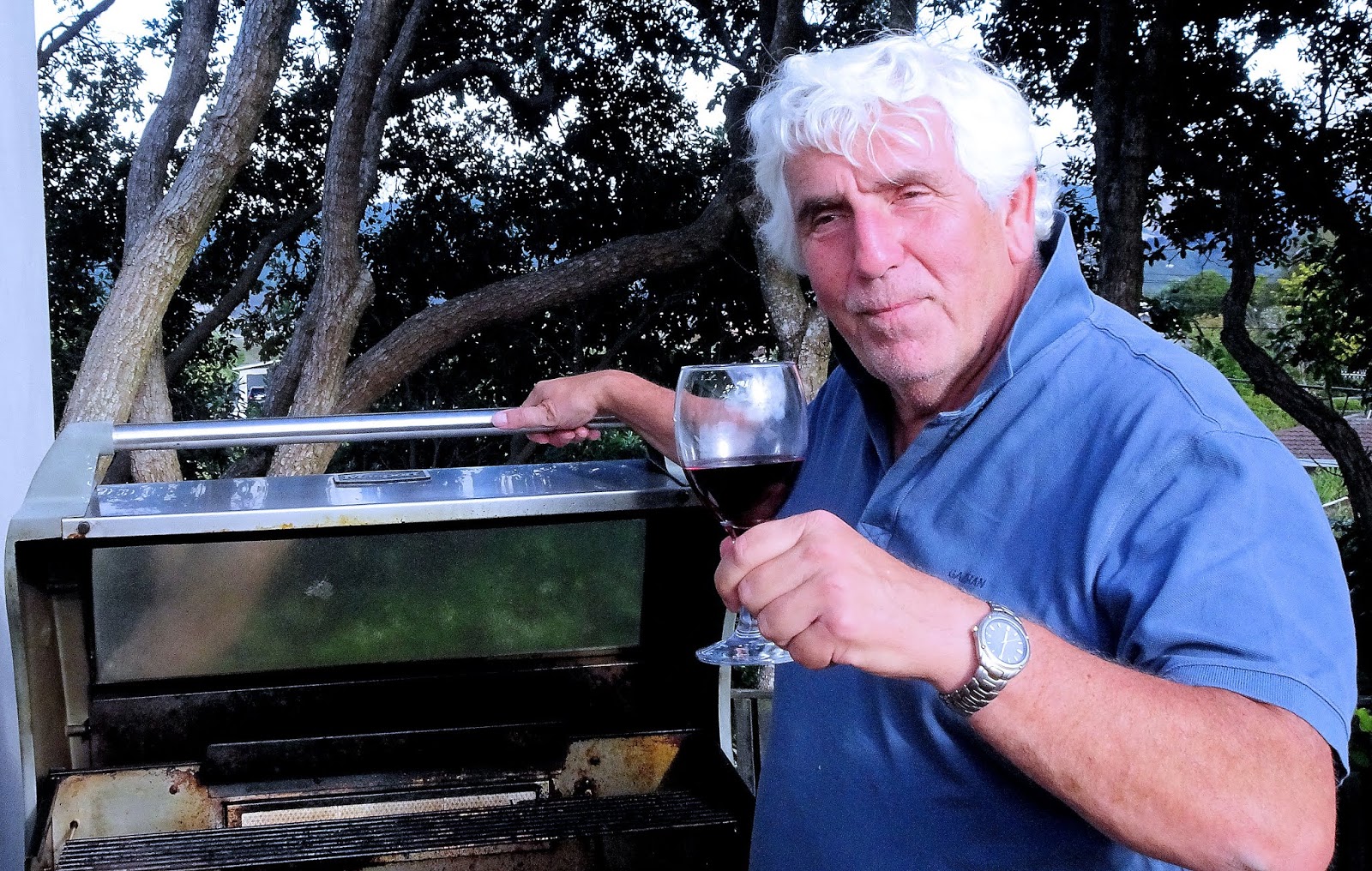
 BBQ experts, Ken Henderson left and John Smith 


Thursday, 7 March 2019


I visited Prague
Prague is so crowded, even in September. This is unexpected, my thinking the summer tourist rush would have been over. Maybe the warm summer jettisoned into autumn has brought the locals out?
I had been intrigued by this country from seeing Czechoslovakia on stamps when I was an aspiring young stamp collector. For some reason stamps from Czechoslovakia were common in schoolboy-affordable bargain bags from stamp shops. Those days I never thought I would visit the country’s capital, Prague.
 Czechoslovakia has a chequered past instigated by Nazi reprisals of WW2 followed by a Soviet-backed coup. Later, on the first day of 1993, the embattled country was dissipated to become the Czech  Republic and Slovakia. 
Getting to Prague is a pleasing three hour train journey along the Ebony River from Dresden in East Germany.  We glide past fascinating castles and other sites. I am thinking this would have been a prize bicycle touring route. Everything is pristine particularly along the German section –reflecting Germany’s vigorous environmental efforts.
 Despite Czechoslovakia being an EU country, it has stuck to its complicated Czech Krona currency rather than adopting the simpler Euro.  Paying our beer waiter is an exercise in confusion, especially with my Euro mind-set, having previously been in Germany. The city (pop. 1.281 million) is delightfully ancient European. No wonder it is known as the ``City of one hundred spires’’
The old town of narrow cobbled streets is a gem. It was laid out during the fourth century. It has impressive cathedrals surrounding the town square. It is especially famous for its medieval Astronomical clock. Regrettably it is disguised by scaffolding and tarpaulins while under repairs. Anything 600 years old is likely to need major rebuilding.  Cannot imagine the work that will be required on me when I am that old? In action, the clock exhibits an animated display on the hour.

Old Prague
 I discover many curiosities including a special Tobacco and Alcohol shop, a live bronzed motorcyclist statue reminding me of our Burt Munro and a street-side BBQ offering grilled piglet.

                                                              Bronzed motorcyclist. He gives me a wink.

 A Prague highlight is walking over the picturesque 14th-Century Charles Bridge linking the old town to the slightly more modern Prague and the castle where Czech rulers have resided for more than 1200 years. The bridge is named after King Charles IV who, in 1402, instigated its construction over the Vitava River.

Towers on Charles Bridge

 The many statues of, mostly, Catholic saints are complemented by animated artists and musicians. Musicians perform with amazing emotion. I surmise that is the Czech style.

Portrait artist

Exuberant musician

 The bridge is so crowded. Many set out to cross it early in the day. Predictably the old town and Charles Bridge has offered many movie locations. A short documentary of 2011 is Art on the Bridge.
The slightly more modern Prague has a busy tramway (light Rail metro). Some classic vintage tramcars have modernised and still operate on the system. Unlike many European metre-gauge tramways, Prague’s tramcars run on Stephenson’s standard gauge (1435 mm) Route km is 518 on which 857 tramcars operate.

Prague light rail

                                                            Modernised classic tramcar

 And the Czech beer is totally wonderful. A pilsner Urquell is popular on warmer days.as are some tasty dark beers. No wonder the Czech Republic boasts the world’s most beer drinkers per capita. To drink beer in Prague is to partake in a cultural experience.  We are delighted to participate.

Saturday, 23 February 2019


Tripping along memory lane in Christchurch
On Friday February 22, many people commemorated the eighth anniversary of the Canterbury earthquakes that demolished much of our city.  Former Mayor, Sir Bob Parker, on his Facebook Page, appropriately described February 22, 2011 as Christchurch’s ``Ratbag Day.’’
The Mayor, himself injured during the earthquakes, became the excellent front-man presenting televised updates. He was distinguished by his orange jacket and signature T-shirt inscribed ``Munted.’’


We rang the New Zealand World Peace Bell on Friday as part of the remembering 185 deaths resulting from the seismic disaster.  Many of them were young overseas students studying in Christchurch.  The World Peace Bell had been an integral part of the official commemoration prior to the Earthquake Memorial being established along the river. February 22 certainly justifies its moniker ``Ratbag Day.’’
February 23 this year will likely be remembered as the ``Fabulous Day.’’ It was the first open day for the restored and strengthened Christchurch Town Hall. The Hon. Gerry Brownlee, minister in charge of the massive Christchurch rebuild, had rejected restoring the Town Hall.  Mayor Bob Parker disagreed. He and his Council decided to restore the building. Further investigation by the following Lianne Dalziel-led Council agreed and made the restoration happen. Part of the reasoning related to the city having lost so much of its built heritage. So I went for a look, arriving soon after the ribbon cutting by the Mayor and 90-year-old Sir Miles Warren, one of the Town Hall architects. It turned out to be my trip along memory lane.


 Back in 1972 I had a preview owing to having been contracted by the Listener, to provide photographs of the opening. I recall being invited to step into the auditorium. I was thinking, it being a Council job, it would look good. I was unprepared to be wowed by what I saw. It was magnificent. And that was before the Rieger pipe organ was added.


The auditorium’s elliptical cylinder design was the concept of Sir Harold Marshall, a specialist in acoustics at the University of Auckland’s School of Architecture. His Christchurch Town Hall achievement (particularly its  outstanding acoustics) was to influence the design of concert chambers worldwide. 


 I remember photographing the Ferrier Fountain beside the river being unveiled by Mayor Hamish Hay. Again I was expecting something quite good, knowing it was reminiscent of the famous El Alemein fountain in Sydney’s King’s Cross. And again I was wowed. 


 Up to the moment the Town Hall was opened I had perceived Christchurch as an uninteresting, mostly boring, city. The Town Hall changed all that. I recall subsequently attending concerts in the auditorium. One featured comedian Harry Secombe (BBC Goon Show). Another Ron Goodwin best known for his stirring movie scores. Then there were the Christchurch School of Instrumental Music (CSIM) concerts in which my eldest son, Paul, played his viola. A stand out one year in the CSIM Youth Orchestra was solo violin player Fiona Pears. Her hair style had her appearing like a ruffian teenager that frequented Cathedral Square. Playing a technical Sarasate piece, her musical flair appealed to hearts and souls. Fiona Pears was greatly gifted. No wonder she would be soon compared to Nigel Kennedy, the English ``punk’’ classical violinist who was wowing audiences worldwide during the early 1990s.   
The Town Hall restoration was complex owing to its riverside location. The controversial $167 million price tag was about one third over budget. It would be impossible to say it wasn’t worth it. The result represents an amazing achievement and a credit to Christchurch City Councils going into bat for it. The open day tour was exceedingly well organised, steering us through a course to see it all, along with a photographic exhibition of the restoration.
 The building has been strengthened to have a better outcome in a future seismic event. The best of it is that the result resembles the original. The reassembled 50 panels of Pat Hanly’s 1971 ``Rainbow’’ mural was looking superb. (I recall the controversy the mural caused at the time.) 


The walk-through concluded in the auditorium complete with musical performers –the Rieger pipe organ looking magnificent. Although it suffered no great damage during the  earthquakes, it required 1600 hour’s restoring work by Austrian organ builders, Rieger Orgelbau.
With the Town Hall restoration, Christchurch people have a familiar complex returned to them. It is something reassuring amongst the rebuilt city’s many modern-style buildings. Regarding the cost, one long-time Christchurch resident was quoted, ``It is way beyond the value for money.’’ I heartily agree. The open day had certainly tripped memories. It was inspirational.


Saturday, 16 February 2019


    Looking for Dorothy
New Zealand is a country of waterfalls. Does that suggest it rains a lot under the long white cloud?
New Zealand has 249 named waterfalls spread from north to south.
As with most monikers in Aotearoa-New Zealand, waterfall names are mostly of Maori or British origin.
``Bridal veil’’ is an overused name for waterfalls. ``rere’’ is also frequently used within waterfall names –to leap or fall.
 Waterfalls are also named after real people. One of the highest, Sutherland Falls, is a highlight while walking the Milford Track in Fiordland. The 580 metre-high falls are named after Donald Sutherland, a colourful pioneer of Milford Sound.
Tourist promotions will have us seeking out the best known and spectacular features of New Zealand’s natural environment. I suspect money spent on such advertising suits crowded tourism.
For my money, I delight in discovering almost hidden away natural wonders.

Waterfall in Arthur's Pass National Park, named after the Devil himself

 One is Dorothy Falls, inland from Hokitika and close to magnificent Lake Kanerie. Dorothy Falls are found along a narrow gravel road just beyond Hans Bay, a popular picnic, camping and swimming spot on the eastern side of Lake Kanerie. Despite being visible from the road, it would be easy to pass by Dorothy Falls. They semi-hide amongst tree ferns and other foliage growing abundantly in the high rainfall West Coast climate. Dorothy Falls are 64 metres high. Much of the upper section is out of site, having the visitor thinking they are about half that height. Gazing upwards one will see water gushing through a narrow rock cleft. The water cascades in multi steps to its base pool.  
We have to walk from the road to the falls. The Department of Conversation sign agreeably indicates the walk is two minutes –return.


Dorothy Falls near lake Kaneri on South Island West Coast

A jumble of smooth rounded boulders surround the base of the falls. They can be climbed on or used for a photogenic foreground. The water is a tanned hue, owing to a predominance of fern roots. Nearby Lake Kanerie where Dorothy Fall’s water drains to is also tanned. The water is, however, clean and safe for water sports.
Dorothy Falls are part of the 7000 ha. Lake Kanerie Scenic Reserve.


Dorothy Falls- semi hidden gem Falling in leaps Who was Dorothy?

Another short walk follows the stream from the falls to the lake. If one is able to launch onto the lake in a boat the full height of Dorothy Falls can be seen. One would also see the surrounding mountains that are reflected in the unruffled lake.
 I was confident there must be a real Dorothy who was the inspiration for naming the waterfall. A comprehensive appeal had a colleague kindly respond.
According to mythology Dorothy Gale, from Kansas, was blown to New Zealand on a tornado. She landed amongst the native forests of the South Island West Coast. Covered in dust and grime from her oceanic trip, she was glad of a thorough rinsing in a waterfall. The waterfall she chose for her scrubbing down was initially named ``Brown Falls’’ owing to the colour of the water ensuing from Dorothy’s grime.
Later, the falls were renamed to honour Dorothy Gale and her blustery arrival in New Zealand. A much more suitable name methinks.